AI-Powered Security Systems Outperform Human Analysts in Threat Detection
New research demonstrates that advanced AI systems can identify cybersecurity threats with 98% accuracy, significantly higher than human analysts.
Read MoreYour premier source for cutting-edge tech news, cybersecurity insights, and data analysis in the digital age.
Explore Latest News
Researchers at the Quantum Data Institute have announced a groundbreaking development in quantum computing that could revolutionize how we process complex data sets. The new quantum processor, codenamed "Qubit-X," has demonstrated the ability to solve problems in minutes that would take traditional supercomputers thousands of years.
This advancement comes at a critical time when organizations are struggling to process the exponential growth of data generated by IoT devices, AI systems, and global digital transformation initiatives. The Qubit-X processor utilizes a novel approach to quantum entanglement that significantly reduces error rates, a major hurdle in previous quantum computing models.
Dr. Elena Rodriguez, lead researcher on the project, explained: "What we've achieved isn't just an incremental improvement. We've fundamentally changed how quantum bits interact with each other, creating a more stable and scalable system. This brings us closer to practical quantum computing applications in fields like cryptography, drug discovery, and climate modeling."
The implications for data security are particularly profound. Current encryption methods, which rely on the difficulty of factoring large numbers, could become obsolete against quantum computing power. However, the same technology also enables the development of quantum-resistant encryption, creating a new frontier in cybersecurity.
Industry analysts predict that quantum computing could add $1 trillion to the global economy within the next decade. Major tech corporations have already begun partnerships with the research team to explore commercial applications. Microsoft's Azure Quantum division has expressed interest in integrating the technology into their cloud computing services, while Google's Quantum AI team is exploring collaborative research opportunities.
Despite the excitement, experts caution that widespread adoption of quantum computing is still years away. The current prototype requires near-absolute zero temperatures to operate, presenting significant engineering challenges for practical implementation. However, the research team is confident that these hurdles can be overcome within the next five to seven years.
As quantum computing continues to advance, businesses and governments must prepare for the paradigm shift it will bring to data processing, security, and computational capabilities. The race to quantum supremacy is accelerating, and the implications will reshape our technological landscape in ways we're only beginning to understand.
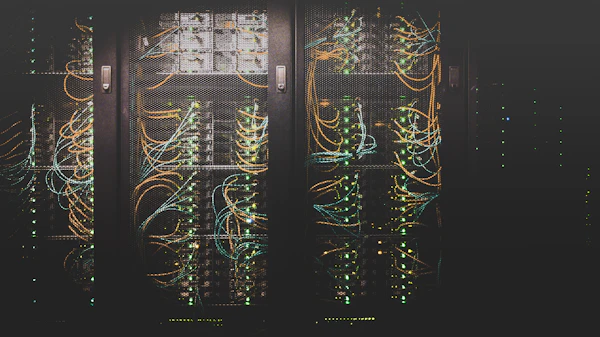
New research demonstrates that advanced AI systems can identify cybersecurity threats with 98% accuracy, significantly higher than human analysts.
Read More
Enterprise adoption of blockchain for data verification has increased by 300% in the past year, transforming how organizations ensure data authenticity.
Read More
Advanced analytics tools are enabling companies to process petabytes of data in real-time, driving unprecedented business intelligence capabilities.
Read More
Security researchers have identified critical flaws in popular IoT devices that could allow attackers to compromise entire networks through connected devices.
Read More